
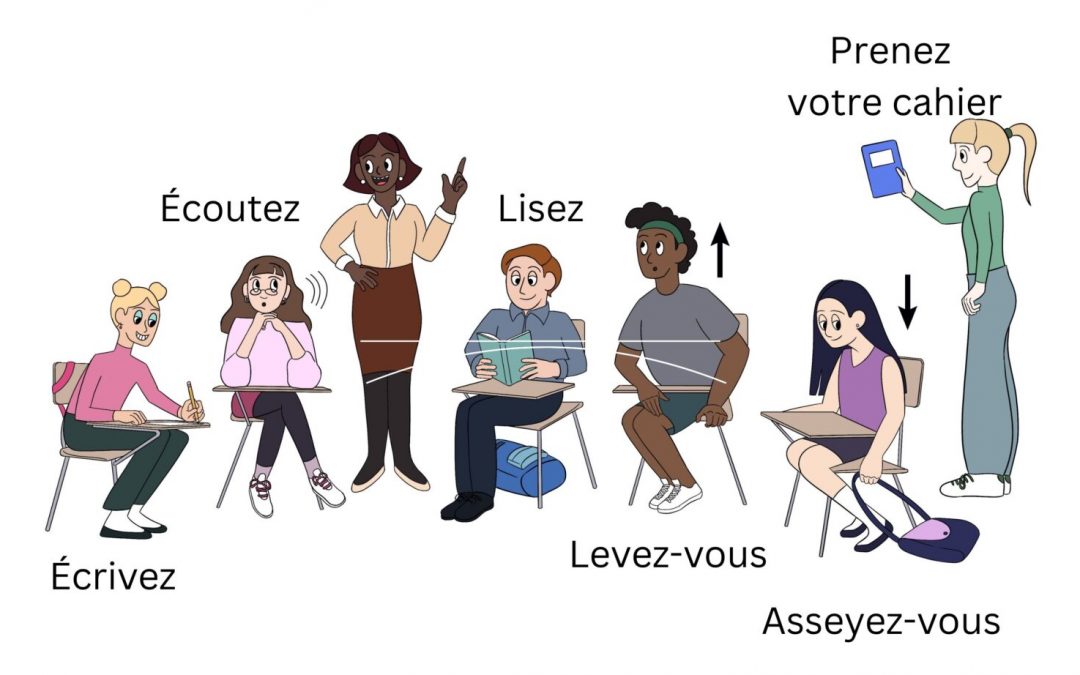
After years of relying on traditional textbooks, French instructor Catherine Gloor took the plunge into creating Open Educational Resource (OER) materials for her French 100 and 101 courses. What started as a daunting project transformed into one of the most rewarding professional experiences of her career—and she wishes she had done it years ago. The result was a new multimedia textbook, adapted and localized to fit the learning journey of French language studies at CapU at zero cost to students: CapU FREN 100 – Simple Book Publishing
The Challenge of Letting Go
Gloor describes abandoning the familiar textbook that had been her teaching anchor for years as “a humbling experience.” There’s something deeply unsettling about stepping away from materials you’ve trusted and having to reflect deeply on your pedagogy—what actually works, what doesn’t, and why. Without that familiar structure, she found herself questioning everything and rebuilding from the ground up. She started with an existing Open Textbook published in California, licensed under Creative Commons for adaptation and reuse, and rebuilt it with the needs of her students in mind.
Building Something Better Together
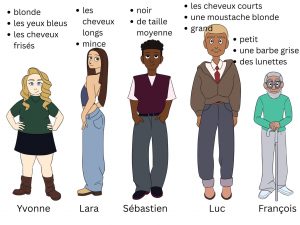 Catherine says that the transformation wouldn’t have been possible without strong support from CapU’s Centre for Teaching Excellence and a connection with a CapU student through the IDEA graphic design program. Pascal Milelli and Chelsea Bell Eady helped her find the right student for her project and Phoebe Verdon provided the colourful and engaging illustrations for the reimagined textbook. This cross-departmental partnership was a revelation for Gloor—”we don’t do enough of this kind of collaboration,” she notes—and it brought fresh perspectives that she never would have discovered working alone.
Finding funding through a CARS grant was crucial, but the real investment was the time Gloor spent researching, curating, and adapting existing open resources. The challenge, she discovered, isn’t that OER materials don’t exist—there are incredible resources from Australia, Tahiti, and beyond—but finding and adapting them to fit your specific context and learning outcomes.
Technology That Actually Works
Despite describing herself as “not particularly tech-savvy,” Gloor found Pressbooks surprisingly accessible for creating their new digital textbook. The platform makes it relatively easy to organize content, embed interactive elements, and maintain a professional appearance. What really excited both her and her students, though, were the H5P interactive exercises integrated into their platform (and also available via eLearn). Students much preferred these automatically graded pre-class activities over the old routine of writing out sentences by hand and uploading photos.
The Results Speak for Themselves
After two full semesters of testing, the evidence is clear: Gloor’s Spring 101 students reached the same learning outcomes as those from the previous year who used traditional textbooks. But the journey to get there was markedly different. Students demonstrated higher engagement levels and, perhaps most importantly, seemed more confident speaking the language after two semesters.
The student feedback has been overwhelmingly positive. They appreciate the significant cost savings, love the digital format’s convenience, and those in FR101 who had taken the 100 course with the previous textbook, consistently noted how much handier the new materials were to use. Students who previously struggled with handwritten exercises found the digital format more accessible, yet their writing skills developed just as strongly as in previous years.
Word has even spread beyond campus—students are using Gloor’s materials to study for French proficiency tests at other institutions, which speaks to both the quality and accessibility of what she’s created.
Advice for Faculty Considering the Jump
Gloor’s strongest advice for faculty contemplating creating or adapting OER materials is simple: “Give it a try.” The student response has been remarkable, and the professional growth that comes from this kind of deep pedagogical reflection is invaluable.
“You don’t need to be a technology expert,” she emphasizes. “Provided there is support, it’s possible for anyone.” She encourages colleagues to seek out their institution’s teaching and learning center, explore cross-departmental collaborations, and not be afraid to apply for funding to give themselves the time this work deserves.
Most importantly, Gloor reminds fellow educators that this is an iterative process. She’s still digesting, reflecting, and planning changes for the coming year. The beauty of OER is that you can continuously improve based on student feedback and your own evolving understanding of what works.
A Continuing Journey
This project reminded Gloor why she became an educator in the first place. Watching students engage more deeply with the language, seeing their relief at not having to purchase expensive textbooks, and knowing that her materials will continue to be freely available to future learners has been deeply rewarding.
“I would not have done this work without CTE’s support,” Gloor acknowledges, emphasizing the importance of institutional backing for such endeavors. The reflection and improvement will continue over the next few years, but she can confidently say this switch has been “a positive transformation.”
To her fellow faculty members, Gloor offers this encouragement: the initial vulnerability of stepping away from familiar materials is temporary, but the benefits to both educators and students are lasting. As she puts it, “Give it a try—students have responded really well.”
Interested in exploring the creation or adaptation of a new OER for your discipline? Come talk to us in the Centre for Teaching Excellence.
Other Resources
B.C. Open Collection | BCcampus
Writing for Success – 1st Canadian H5P Edition – Simple Book Publishing
Recent Comments