
Post-secondary institutions are legally required to provide reasonable accommodations for students with disabilities, and instructors play a crucial role in this process. This means designing courses with universal principles in mind: providing captions for videos, ensuring readable fonts and color contrasts, offering materials in multiple formats, and creating flexible assignment structures. The goal is ensuring that all students can engage meaningfully with course content.
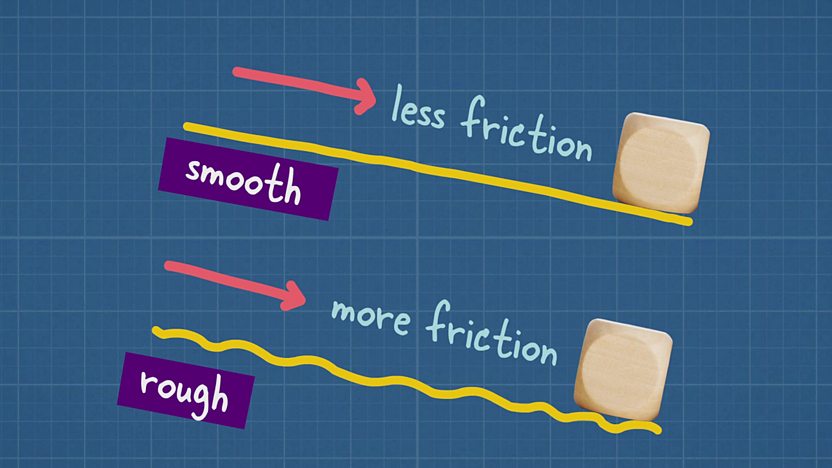
But this goal can sometimes run up against a number of barriers, sometimes called ‘access friction’. This friction can come from a lot of sources – a lack of resources, time, an environment that is not conducive to flexibility – and also the capacity of the instructor to meet the needs of all students.
How should we respond to access friction that arises in our classrooms? How should faculty developers address the existence of access friction with instructors? A point that I have learned from disability justice organizers is that access needs may appear to be opposing or conflicting, but we do not need to view them as “in competition” as long as all members of the community are willing to work towards a solution together. Friction is part of the inclusion process. Aimi Hamraie and Kelly Fritsch write about the idea of “access as friction,” a phrase that acknowledges that nearly all forms of access involve some struggle, and pays tribute to the way disability activists have had to deliberately create friction (i.e. public protest/civil disobedience) to win access in the public sphere. Another way of saying this is that leaning into friction (rather than avoiding it) can lead to change and growth for the better. This may seem like an obvious point, but I find that it is actually quite challenging in much of the current academic environment, where we are often asked to view students as customers and instructors as superhuman. In fact, I think a common source of “access friction” in the classroom is a difference between the access needs of students and those of the instructor. In all likelihood, navigating access friction will require open communication and flexibility from all members of the class community.
~ Sarah Silverman, Navigating Access Friction in Teaching
Sarah Silverman has been exploring this type of friction in a series of articles looking at instructors with challenges of their own and offering alternative approaches that acknowledge this friction while helping instructors negotiate multiple needs.
For example, a busy classroom engaged in a group discussion activity that is based on Active Learning principles can be an overwhelmingly noisy and chaotic experience for neurodivergent students and instructors. At the same time, robust research has shown us that active learning is an effective learning strategy for most students. One way to address that is to find multiple spaces for students to meet nearby – in the corridor, in the room next door, outside – so that the class is in proximity but the noise level is manageable for everyone.
Sending the slides ahead of class – by Sarah Silverman
Access frictions with background noise in the classroom
Navigating “access friction” in teaching
Recent Comments